

Sticky Diamonds (Flaming Link): How the Sticky Feature Works in This Slot
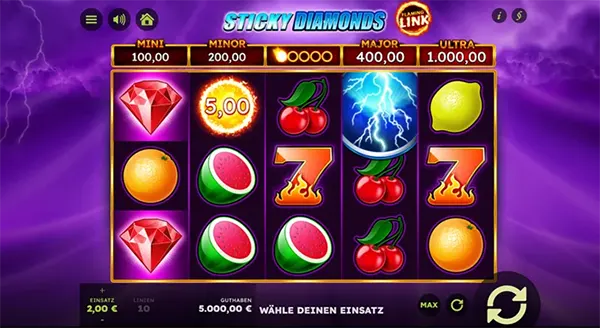
Sticky Diamonds is one of the titles from the Flaming Link series developed by Aristocrat Gaming. The game is built around the well-known Hold & Spin bonus mechanic, but the main attraction is the sticky diamond symbols that remain locked in place once they land. This mechanic creates a different rhythm compared with many other jackpot slots: instead of relying purely on frequent spins, the game gradually builds a board filled with locked symbols that can lead to fixed jackpot prizes. Understanding how the sticky feature works is essential for players who want to evaluate the game’s real mechanics, volatility, and long-term payout behaviour.
Flaming Link Series and the Role of Sticky Diamonds
The Flaming Link series became widely recognised in both land-based casinos and online releases during the late 2010s and early 2020s. Developed by Aristocrat Gaming, the concept revolves around a Hold & Spin feature where special symbols lock in place while additional spins are awarded to fill the grid. Sticky Diamonds follows the same concept but introduces diamond symbols that remain fixed on the reels once triggered in the bonus round.
In Sticky Diamonds, the grid typically expands to a 5×4 layout during the bonus phase. Each diamond symbol carries a credit value or jackpot label. Once the feature begins, these symbols remain on the board and do not disappear between respins. This mechanic allows players to gradually accumulate symbols until the grid becomes full or the respin counter runs out.
Because the game focuses on accumulation rather than traditional paylines, most of the potential value comes from the Hold & Spin round. Standard spins mainly act as a gateway to trigger the feature. This design makes the game noticeably volatile, as meaningful payouts tend to occur during bonus sequences rather than base gameplay.
Key Mechanics Behind the Sticky Symbol System
The sticky feature is triggered when a required number of diamond symbols appear on the reels during a regular spin. Once activated, the game enters the Hold & Spin mode. At this stage, all triggering symbols remain fixed in their positions while a respin counter begins.
Each time a new diamond symbol lands during the bonus round, it becomes locked on the grid and resets the respin counter. This mechanism gives players multiple chances to expand the number of locked symbols on the screen. The round continues as long as additional diamonds appear before the respin counter reaches zero.
If the entire grid is filled with sticky diamonds, the feature ends immediately with the maximum possible board result. Depending on the specific configuration of symbols, this outcome can include fixed jackpots such as Mini, Minor, Major, or the Grand prize that is commonly associated with Flaming Link titles.
How the Hold & Spin Bonus Determines Payout Potential
The Hold & Spin round is the mathematical core of Sticky Diamonds. Unlike slots where bonuses introduce multipliers or expanding wilds, this system relies on collecting multiple independent symbol values. Each diamond represents a direct credit amount or a jackpot indicator.
The payout structure is therefore based on accumulation rather than line combinations. Once the feature ends, all locked diamond values are added together to form the final bonus win. This system allows the game to produce both moderate returns and occasional large jackpots depending on how many symbols are collected.
Another important detail is that jackpot symbols usually occupy specific positions or appear under certain probability conditions within the bonus algorithm. For example, smaller jackpots such as Mini or Minor may appear more frequently, while the Grand jackpot generally requires a completely filled board.
Volatility and Return Characteristics
Sticky Diamonds is generally considered a high-volatility slot. Most spins in the base game generate small returns or none at all, as the primary objective is triggering the Hold & Spin feature. Players often experience long stretches of standard spins before reaching a significant bonus round.
The return-to-player value in Flaming Link games typically falls around the mid-to-high 90 percent range depending on the casino configuration. However, the distribution of wins is uneven because large payouts rely heavily on the sticky symbol feature.
This volatility structure is deliberate. By concentrating most of the payout potential in a single mechanic, the game creates moments of escalation where each new diamond dramatically increases the possible outcome. As a result, bonus rounds tend to be the most memorable part of the experience.
Strategic Considerations for Players
Although slot outcomes are random, understanding the structure of Sticky Diamonds can help players manage expectations and bankroll decisions. Because the game’s value lies mainly in the bonus feature, sessions should be planned with enough balance to allow multiple attempts at triggering the Hold & Spin round.
Another consideration is bet sizing. Since jackpot values in Flaming Link titles are often tied to the current wager level, increasing the stake may unlock higher potential jackpot amounts. However, this also raises the volatility and risk during longer sessions.
Players should also remember that sticky mechanics create psychological tension during the respin phase. Each new diamond symbol resets the counter, which can extend the feature significantly. While this can lead to substantial wins, it can also end quickly if no additional symbols appear.
Why Sticky Features Remain Popular in Modern Slots
The sticky mechanic used in Sticky Diamonds reflects a broader design trend in modern slot development. Game studios increasingly focus on mechanics that allow wins to build gradually rather than appearing instantly from a single spin.
This approach creates a sense of progression within the bonus round. Each new symbol changes the probability of filling the board and raises the potential reward. For many players, this incremental build-up generates more engagement than traditional payline slots.
For developers, sticky systems also provide a flexible framework for integrating jackpots and variable symbol values. By combining these elements with respin mechanics, games like Sticky Diamonds remain relevant even as new slot formats continue to appear across online casinos in 2026.